- Empty cart.
- Continue Shopping

How to Check Mattress Quality Before Buying: 8 Simple Tests Anyone Can Do

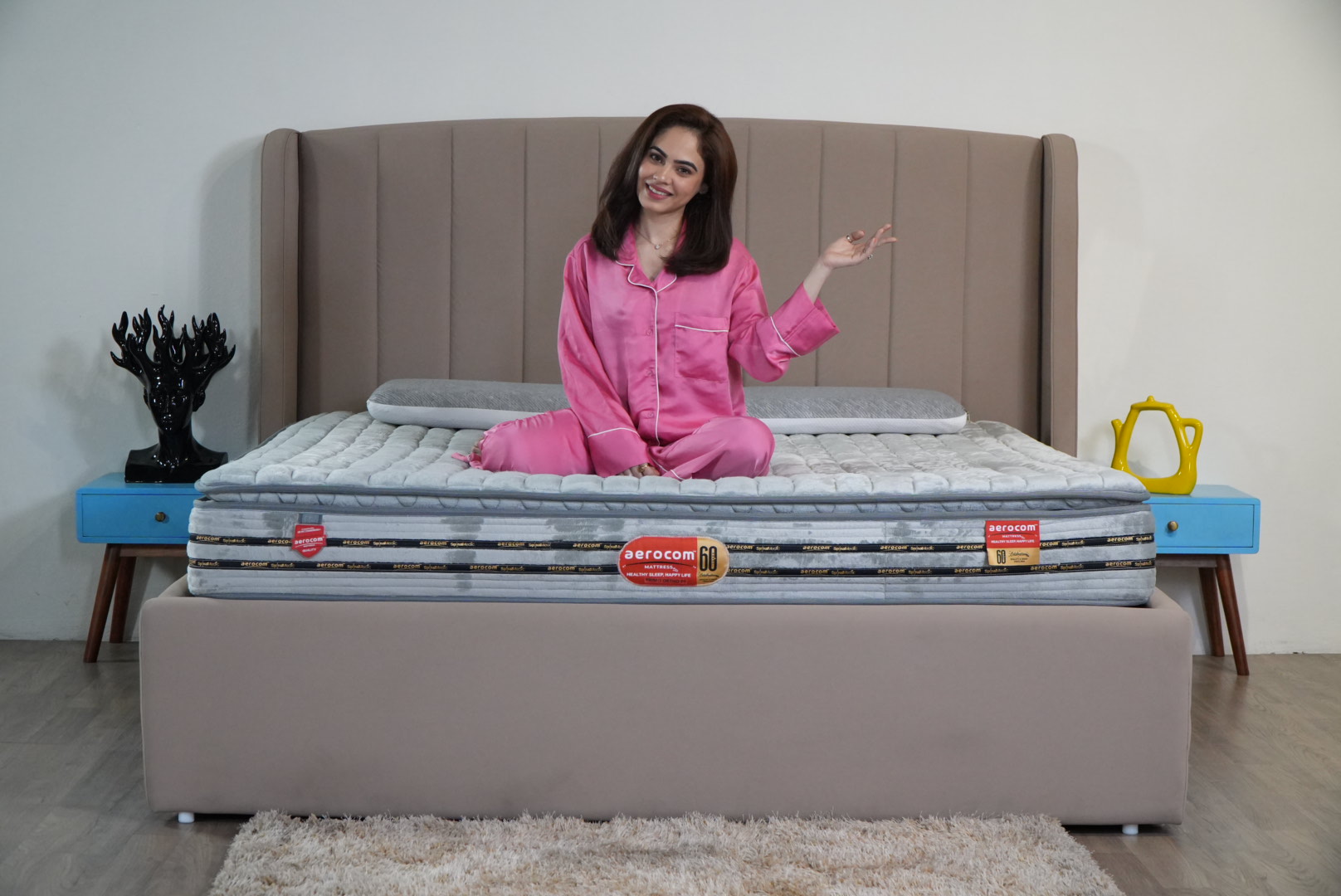
How to Check Mattress Quality Before Buying
Two mattresses can look almost identical in a store and perform completely differently after a year. The difference is almost always inside, in materials you cannot see through the cover.
Knowing how to check mattress quality protects you from buying something that feels fine on the first day but sags within months. You do not need technical knowledge. A few simple questions and tests reveal most of what matters.
In this guide, the Aerocom Mattress team explains what is inside a mattress, what the key numbers mean and eight tests you can do in any store in Nagpur, Kolkata or anywhere else.
Why Mattress Quality Is Hard to Judge
A mattress cover hides almost everything that decides how long the mattress will last. Two mattresses with the same thickness, the same fabric and the same label on the front can have very different materials underneath.
Comfort in the store is also misleading. A soft, low-quality foam can feel pleasant for a few minutes, while its weaknesses only show up after months of nightly use.
That is why Aerocom Mattress encourages buyers to combine two approaches: asking what is inside, and running a few simple physical tests. Together, they give you a much clearer picture than comfort alone.
What Is Inside a Mattress?
Most mattresses have two main parts: a support core and comfort layers, wrapped in a cover.
The support core is the base that holds your body up. It may be high-density foam, coir, a spring unit or a combination. This part decides how long the mattress keeps its shape.
The comfort layers sit on top and decide how the surface feels. They may be softer foam, memory foam, latex or quilted fibre.
The cover is the fabric that wraps everything. A good cover is durable, breathable and, ideally, removable for washing.
When people search for “foam bed inside”, they are usually trying to understand this layered structure. Knowing what each layer does helps you ask the right questions.
Foam Density: The Most Important Number
If a mattress contains foam, the single most useful number is its density. In India, foam density is measured in kilograms per cubic metre (kg/m³).
Density tells you how much material is packed into the foam. Higher-density foam generally lasts longer and resists sagging, while low-density foam feels fine at first but compresses sooner.
Density and firmness are different things. A high-density foam can feel soft, and a low-density foam can feel firm. Firmness is about comfort, while density is about durability.
Ask the seller for the density of each foam layer, especially the support core. A trustworthy seller will tell you or show you the specification. If nobody can answer, treat that as a warning sign. Aerocom Mattress believes every buyer should be able to get this information easily.
How to Check Coir Quality
For coir mattresses, quality depends on how well the fibre is bonded and how dense the sheet is. Good coir feels springy and even across the whole surface.
Press down in different spots. Soft patches or areas that feel hollow can indicate uneven fibre distribution. Also check for loose fibres escaping through the cover, which can suggest weak bonding.
A properly made coir mattress should have a mild natural smell, not a strong chemical odour.

How to Check Spring Quality
For spring mattresses, ask whether the coils are Bonnell (connected) or pocket springs (individually wrapped). Pocket springs move independently and reduce motion transfer between partners.
Ask about the number of coils and the thickness of the wire, since both affect support and durability. Lie on the mattress and move around. You should not feel individual coils, and there should be no creaking or squeaking.
Check the comfort layers above the springs. If they are thin, you may start to feel the coils over time as those layers compress.
8 Simple Tests to Check Mattress Quality in the Store
1. The Lie-Down Test
Lie on the mattress for at least five to ten minutes in your normal sleeping position. Support problems only become obvious after a few minutes, not a few seconds.
2. The Hand Recovery Test
Press your palm firmly into the mattress and release. Standard foam and springs should bounce back quickly. Memory foam recovers slowly by design, but it should still return fully to its original shape.
3. The Edge Test
Sit on the edge of the mattress. A good mattress supports you without collapsing sharply. Weak edges reduce usable sleeping space and make getting up harder, especially for older family members.
4. The Motion Test
If you share a bed, have one person lie still while the other turns over or sits down. Notice how much movement travels across the mattress.
5. The Evenness Test
Run your hands across the whole surface and press down in several places. It should feel consistent, with no lumps, dips or hollow spots.
6. The Smell Test
A new mattress may have a mild smell, but a strong chemical odour can indicate lower-quality materials. A mild smell should fade within a few days of airing.
7. The Cover Test
Check the stitching, zip and fabric. Ask whether the cover is removable and washable, which is especially useful in humid cities like Kolkata.
8. The Paperwork Test
Ask for the product specifications and the warranty in writing. Check what the warranty covers, such as sagging beyond a certain depth, and what might void it.
The Aerocom Mattress team is happy for customers to take their time with every one of these tests before deciding.
How a Mattress Is Made
Understanding how a mattress is made helps explain why quality varies so much. Most mattresses are built in layers, starting with the support core.
For foam mattresses, large blocks of foam are produced and then cut into sheets of the required thickness. These sheets are layered and bonded together, with firmer foam at the bottom and softer comfort foam on top.
For coir mattresses, coconut fibre is cleaned, formed into mats and bonded, usually with latex, into firm sheets. For spring mattresses, coils are formed from steel wire and assembled into a unit, then covered with padding and comfort layers.
Finally, the layers are enclosed in a cover, which may be quilted, stitched or zipped. At every stage, the choice of material and the care taken in assembly decide how well the finished mattress performs. This is why Aerocom Mattress recommends asking what is inside rather than judging by appearance.
Reading Mattress Labels and Warranty Terms
A mattress label should list the materials used, the size and the manufacturer’s details. If the label is missing or vague, ask why.
Warranty terms matter more than warranty length. A long warranty that excludes most real problems is less useful than a shorter one with clear coverage. Read how sagging is measured and whether you need a specific type of bed base.
Keep the invoice and warranty card safely. You will need both if you ever make a claim.
Red Flags When Buying a Mattress
Be cautious if a seller cannot tell you what is inside the mattress, will not provide specifications in writing, or pressures you to buy immediately because an offer is supposedly ending today.
Other warning signs include no manufacturer details on the label, a very strong chemical smell and a surface that feels uneven when you press across it.
Prices that seem far too low for the stated materials are also worth questioning. Good materials cost money, and a very cheap mattress claiming premium materials may not be what it appears.
Does Thickness Mean Better Quality?
Many buyers assume a thicker mattress is always better. It is not. Thickness tells you how tall the mattress is, not what it is made of.
A well-made 6-inch mattress with a high-density core can outlast a poorly made 10-inch mattress filled with low-density foam. Always ask about the materials inside, not just the thickness.
That said, heavier sleepers and those who want deeper comfort layers may find 8 to 10 inches more comfortable, provided the materials are good.
Check Mattress Quality With Aerocom Mattress
Checking mattress quality does not require expertise. It requires asking the right questions and taking a few minutes to test the mattress properly.
Aerocom Mattress serves customers in Nagpur and Kolkata, and our team is happy to explain what is inside any mattress you are considering. Bring this checklist with you, run the tests, and choose a mattress you can trust for years.
Frequently Asked Questions
How do I check the quality of a mattress?
Ask what is inside, especially the foam density of the support core, and test the mattress by lying on it, pressing it, checking the edges and reviewing the warranty in writing.
What does foam density mean in a mattress?
Foam density is the weight of foam per cubic metre, measured in kg/m³. Higher density generally means better durability, but it does not decide softness or firmness.
Is a thicker mattress better quality?
Not necessarily. Material quality and density matter more than thickness. A well-made 6-inch mattress can outlast a poorly made 10-inch one.
How can I tell if a mattress will sag early?
Low-density foam, uneven coir, weak edges and thin comfort layers over springs are common signs a mattress may sag sooner than expected.
Should a new mattress smell?
A mild smell that fades within a few days is normal. A strong, lasting chemical odour is a warning sign.
Can Aerocom Mattress explain what is inside its mattresses?
Yes. Contact the Aerocom Mattress team in Nagpur or Kolkata and ask about the materials and construction of any mattress you are considering.